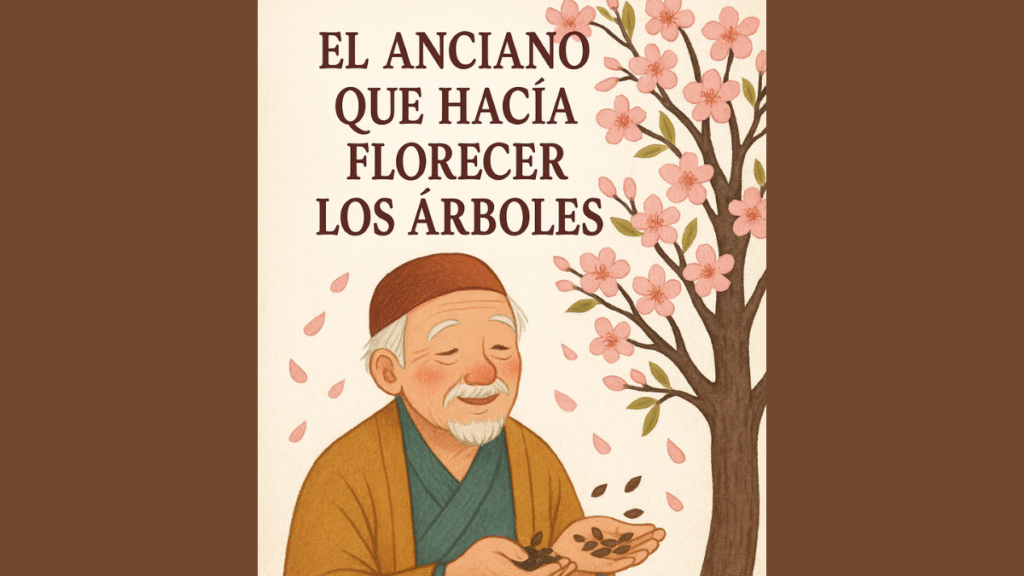
This tale tells the story of a kind, generous old man who lived in a small village with his wife. Both were hardworking, humble people who lived in harmony with nature. They had no children, though their greatest joy was their dog, Shiro, a clever and loyal animal. The old man took wonderful care of Shiro, and the dog helped him in his daily life, going everywhere with him.
“The Old Man Who Made Withered Trees Blossom” is a traditional Japanese tale about a kindhearted old man and his wife, who lived humbly with their dog. One day the dog helps them find a buried treasure, but when a greedy neighbor tries to do the same, his luck runs out. Throughout the story the old man shows gratitude, compassion, and humility, qualities that are rewarded magically when he manages to make withered trees bloom using the ashes of his dead dog.
The tale passes on universal values like kindness, virtue rewarded, and greed punished, all framed in the mysticism and reverence for nature so typical of Japanese folklore. It was collected in anthologies of traditional Japanese stories during the nineteenth century and brought to Western readers by authors such as Yei Theodora Ozaki in her book Japanese Fairy Tales (1903).
One day, while the old man and his dog were walking through the fields, Shiro started digging at one particular spot in the ground. Curious, the old man began digging too, and to his amazement he found a chest full of gold coins. The discovery was taken as a blessing, a gift from heaven in return for his goodness. Neither the old man nor his wife let greed take hold of them. They shared part of their fortune with their neighbors and went on living humbly.
Their neighbor, a greedy and ill intentioned man, saw what happened and decided to try the same thing. He asked the old man to lend him the dog, hoping it would lead him to another treasure. Reluctantly, the old man agreed. Because the neighbor’s heart was selfish and cruel, though, the dog found nothing. Enraged, the neighbor killed the dog and buried him.
Devastated by the loss of his beloved Shiro, the old man asked for the dog’s remains and brought them home. In his deep sorrow, he carved a mortar with his own hands from the wood of the tree that had grown over the dog’s grave. Miraculously, when he used the mortar, grains of rice and gold coins came pouring out. Once again, the old man’s generosity and love were rewarded with wonders.
Seeing this, the neighbor tried to copy him yet again. He stole the mortar, but when he used it, all it produced was ashes. Furious, he broke it apart and burned it. Moved once more by the loss of something that represented his beloved dog, the old man gathered up the ashes. That is when another miracle happened: as he scattered them over the bare winter trees, the trees burst instantly into bloom, covered in cherry blossoms. From then on, people started calling him “the old man who made withered trees blossom”.
Word of the old man reached the feudal lord of the region, who marveled at the beauty of the flowering trees and rewarded him with more riches and showered him with honors. The envious neighbor tried to repeat the act with the leftover ashes, only to cause chaos, and the same lord punished him severely.
The tale ends with the old man living out his days in peace, remembering his dog Shiro fondly and surrounded by the respect of his community. The lesson it leaves is clear: kindness, humility, and genuine love are virtues that bring rewards, while envy, greed, and malice lead to ruin.
Through symbols like the miraculous flowering of the trees and the objects that produce wealth, the story expresses the worth of good deeds and the bond between people and the natural world. The Old Man Who Made Withered Trees Blossom remains an endearing story full of wisdom, a fine example of Japan’s rich oral tradition.
The Old Man Who Made Withered Trees Blossom is a Japanese folk tale that has been passed down for generations. Full of symbolism, beauty, and lessons, this story is a genuine treasure of traditional Eastern literature. Its origins may be ancient, yet its values feel deeply current: selfless kindness, respect for others, and the transforming power of love.
The values and lessons of the tale
- The story tells us that those who act with love and generosity reap rewards, not necessarily material ones but spiritual and emotional.
- The greedy neighbor represents how covetousness and malice blind people and destroy their chances at happiness.
- The trees in bloom symbolize renewal, harmony, and the cycle of life.
- Shiro the dog is not merely a pet, he is a symbol of loyalty, guidance, and gratitude.
Style and tone
Simple and short as it is, The Old Man Who Made Withered Trees Blossom is packed with universal metaphors and poetic touches. The narration is clear, instructive, and easy to follow, which makes it ideal for children and adults alike.
Why read this tale
It is a short story with a big emotional and educational payload, perfect for reading as a family or for anyone who enjoys tales with a moral. It introduces elements of traditional Japanese culture and its deep connection to nature, and it makes an excellent starting point for reflecting on our own actions and values.
The Old Man Who Made Withered Trees Blossom charms you with its simplicity and moves you with its depth. In a world where kindness can sometimes feel invisible, this tale reminds us that selfless acts of love always leave a mark.
Watch the review on YouTube
Did you already know this beautiful Japanese tale? What did you take away from it? Share it in the comments.
If you enjoyed this one, you might also like The Circus of Shooting Stars, another lovely tale for all ages!