“When you have land, you have life.”
— Pearl S. Buck, The Good Earth
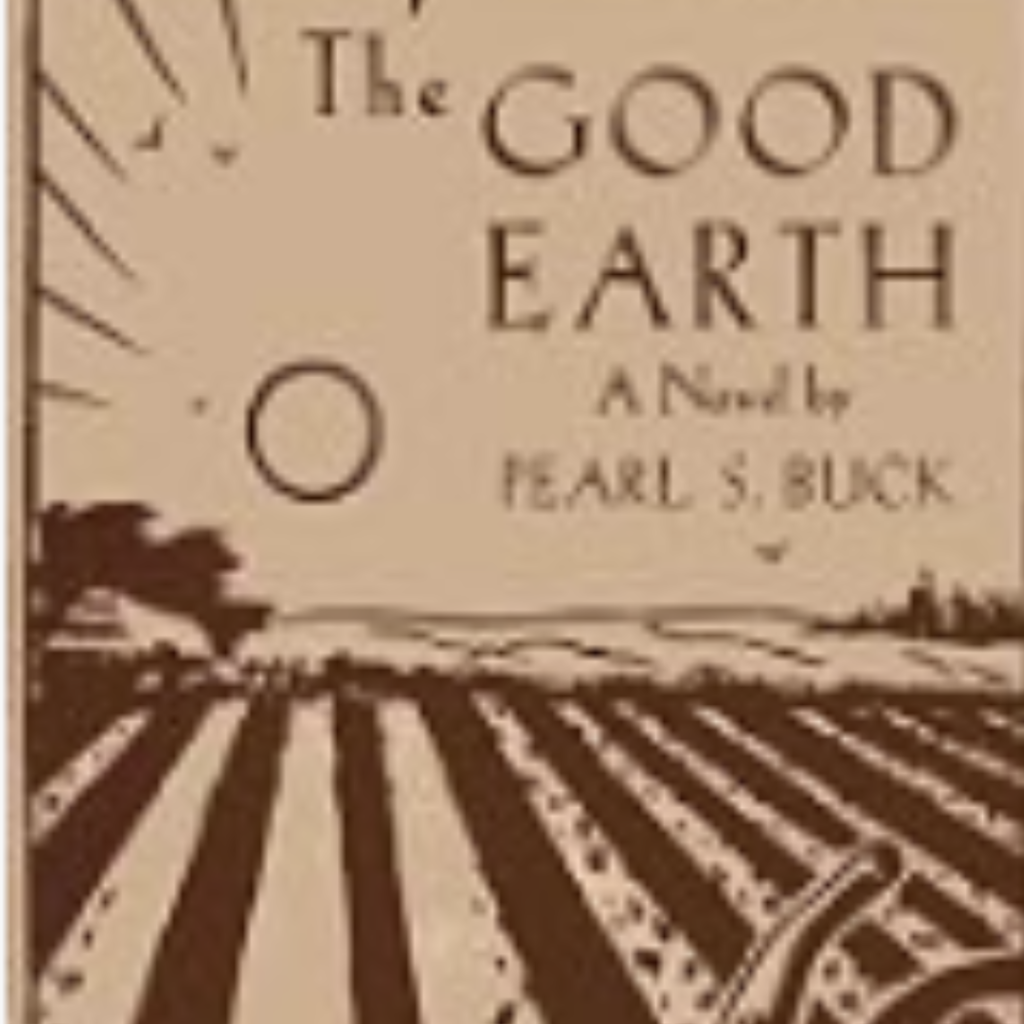
“The Good Earth” is a novel written by Pearl S. Buck and published in 1931. It is her best known work and the one that won her the Pulitzer Prize in 1932. It was also central to Buck receiving the Nobel Prize in Literature in 1938, making her the first American woman to win it. The novel is set in rural China in the early twentieth century and follows the life of the farmer Wang Lung, exploring themes like our relationship with the land, poverty, wealth, tradition, family, and social change.
“The Good Earth” is a classic novel written by Nobel laureate Pearl S. Buck. Set in prerevolutionary rural China, it follows the life of Wang Lung, a humble farmer devoted to the land he works. Over the course of the novel, Wang Lung goes from poor peasant to prosperous landowner while facing famine, war, corruption, pride, and family conflict.
The story opens with Wang Lung, a humble farmer living with his elderly father in a small house in rural China. On the day the novel begins, Wang Lung is preparing to marry O-Lan, a slave freed from the household of a wealthy family, the House of Hwang. Their marriage is not built on romantic love, yet O-Lan proves to be a hardworking, quiet, loyal woman who becomes an essential partner in Wang Lung’s life.
Wang Lung’s powerful bond with the land is established from the very beginning. For him, land means life, stability, wealth, and dignity. Through the hard work of them both, Wang Lung and O-Lan manage to improve their circumstances: they bring in good harvests, have children, and buy more land, including part of the holdings of the declining Hwang family.
Their life takes a devastating turn, though, when a great famine sweeps the region. With no food and no resources, the family is forced to leave home and migrate south, where they survive by begging or picking up small jobs. In the city, Wang Lung confronts the contrast between the extreme poverty of the peasants and the opulent wealth of the urban elite. This period marks a major shift in how he sees the world, and it also fuels his dream of getting his land back.
When a popular uprising breaks out in the city, Wang Lung takes advantage of the chaos to get money from a rich household. That act of opportunism lets him return north with his family and reclaim his farm, plus buy more land and improve his social standing. Over time, Wang Lung becomes a wealthy, respected man. Wealth brings problems of its own: he starts craving luxury, falls for a courtesan named Lotus, and drifts away emotionally from O-Lan, who remains loyal despite the contempt she begins to receive from her husband.
The novel shows how Wang Lung’s social ascent also puts him at odds with his own roots. The more prosperous he becomes, the more his sons adopt urban values and drift away from any reverence for the land. O-Lan dies after a lifetime of sacrifice, never having received the recognition she deserved. Wang Lung, for all his wealth, starts to feel dissatisfied with his sons’ attitudes, since they are planning to sell the land and leave rural life behind.
The book culminates in a symbolic scene: an old Wang Lung sits with his sons and begs them never to sell the land. They agree, yet secretly they clasp hands, suggesting they intend to do exactly that as soon as their father dies. That final image captures the central conflict of the novel: a man who gave his life to the land and believes it is the source of all wealth and honor, set against a new generation that no longer shares that connection.
The Good Earth is a powerful, moving story about rural Chinese life, told in a plain but deeply human style. Pearl Buck, who lived in China for many years, offers a respectful and realistic portrait of peasant life, with complex characters and a narrative that takes in both the personal and the social. The novel explores the individual struggle to survive and prosper, along with the corrosive effects of power, wealth, and disconnection from one’s roots.
About the author: Pearl S. Buck
Pearl Sydenstricker Buck (1892 to 1973) was an American writer and activist, the daughter of missionaries and raised in China. That bicultural upbringing shaped her work profoundly. Through novels like The Good Earth, Buck gave voice and humanity to Chinese farmers at a time when China was viewed in the West with either exoticism or plain ignorance.
She was the first American woman to receive the Nobel Prize in Literature, and her legacy runs to more than 80 books, many of them focused on Asian life and human rights.
The Good Earth and the House of Earth trilogy
Although The Good Earth can be read on its own, it is part of a trilogy known as the House of Earth trilogy, made up of:
- The Good Earth (1931)
- Sons (1932)
- A House Divided (1935)
Each book follows a different generation of Wang Lung’s family, tracing the rise and decline of a peasant family that becomes a landowning class.
The story is personal and universal at once, a quiet epic about the cycle of life, poverty, greed, family, and the relentless passage of time.
Literary analysis
Narrative style
Pearl S. Buck writes in restrained, direct prose with no flourishes. The narrative flows naturally, which lets the reader’s emotions build gradually, like a seed planted in the ground.
Main characters
- Wang Lung: hardworking, ambitious, full of contradictions. His arc reflects the tug of war between attachment to tradition and the seduction of progress.
- O-Lan: one of the most memorable female characters in literature. Quiet, strong, faithful. Her worth goes unrecognized by nearly everyone around her.
- Wang Lung’s sons: they embody the generational conflict, the urge to break from their roots and build a new identity.
Central themes
- Connection to the land: the land is a symbol of life, stability, identity, and power.
- Social change and moral decay: as Wang Lung climbs socially, he loses the values that held him up.
- Gender roles and inequality: O-Lan stands as the symbol of the woman who sacrifices everything.
- Fate and the cycle of life: the book suggests that everything blooms and falls, like crops through the seasons.
How it compares with the rest of the trilogy
| Element | The Good Earth | Sons | A House Divided |
|---|---|---|---|
| Main character | Wang Lung | His sons | His grandson |
| Tone | Rural, tragic | Political, wartime | Philosophical, urban |
| Focus | Connection to the land | Power and violence | Identity and rebellion |
| Emotional depth | High | More action driven | More introspective |
The Good Earth is without question the most emotional and poetic of the three. Sons leans toward action and politics, while A House Divided closes the cycle with an inward look at identity, values, and legacy.
My take
Reading The Good Earth is a transformative experience, because this is not just a historical novel, it is a study of the human soul. Buck does not judge, she shows. Gently and firmly, she reminds us what happens when progress cuts itself off from its roots.
It is a book that moves you, unsettles you, and stays with you. The land as a symbol of what is essential feels especially powerful in our own times.
Would I recommend The Good Earth?
Yes, especially for:
- Lovers of classic literature.
- Readers looking for human, universal stories.
- Anyone who enjoys family sagas with historical depth.
- Readers interested in Chinese culture or in social themes like generational change, poverty, and the role of women.
Where to get the book
You can find The Good Earth at:
- Brick and mortar bookstores
- Amazon, Kindle, or Google Books
- Public libraries and classics collections
There are audiobook versions as well as film adaptations, including one from 1937 that was nominated for Best Picture.
Conclusion
The Good Earth by Pearl S. Buck is more than a novel. It is a meditation on human nature, on the fragility of wealth, and on the strength of the land as both physical and spiritual sustenance. It belongs to a trilogy that follows the full cycle of one family, and while the other books have their merits, it is this first installment that leaves a mark you cannot shake.
Have you read The Good Earth? What do you make of Wang Lung and O-Lan? Leave me your thoughts in the comments!
You can watch the review on YouTube
Subscribe to the blog for more reviews of literary classics and unforgettable sagas.