“You never really understand a person until you consider things from his point of view… until you climb into his skin and walk around in it.”
— Atticus Finch, To Kill a Mockingbird
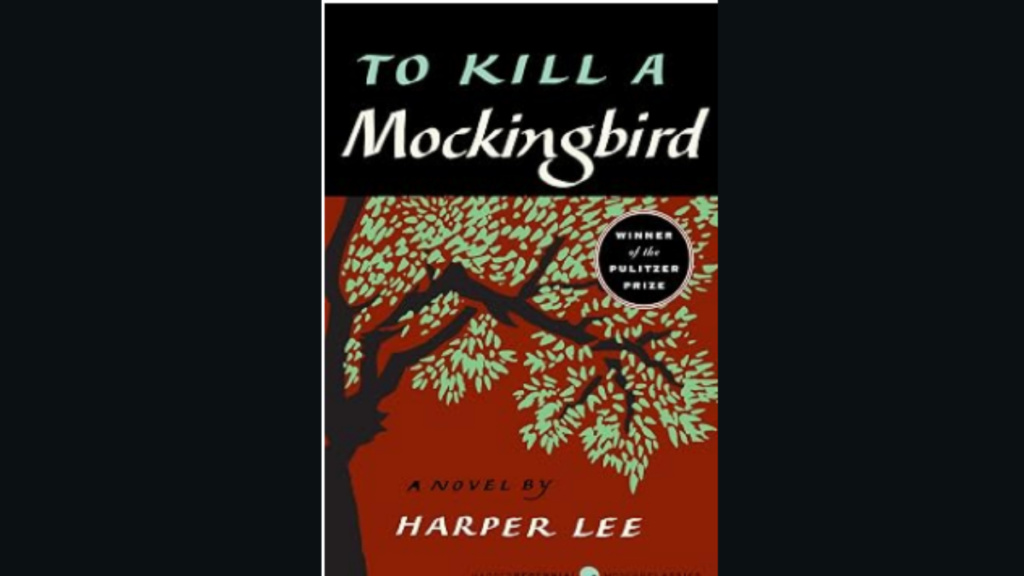
To Kill a Mockingbird by Harper Lee, a masterpiece that weaves together innocence, racism, and justice in the American Deep South. An essential read, powerful and profoundly human.
“To Kill a Mockingbird” is a novel published in 1960 that became a classic of American literature for its searching reflection on justice, morality, and the fight against racism. The story is set in the 1930s in a small southern town called Maycomb, Alabama, and it is told from the perspective of Scout Finch, a six year old girl.
Scout lives with her older brother, Jem, and her father, Atticus Finch, a respected and honest lawyer. Life is relatively quiet for Scout and Jem until their father agrees to defend Tom Robinson, a Black man wrongly accused of raping a white woman named Mayella Ewell. The accusation unleashes a series of racial and social tensions that shake the community.
The novel breaks into two main parts. The first centers on Scout and Jem’s childhood, their games, their mischief, and the mysterious figure of Boo Radley, a reclusive neighbor who stirs up both curiosity and fear in the children. Through that secondary thread, Harper Lee explores innocence, fear of the unknown, and prejudice.
The second part focuses on Tom Robinson’s trial. Despite the obvious lack of evidence and the clear case for Tom’s innocence, the jury, shaped by the racism embedded in that society, finds him guilty. In his defense, Atticus works to prove Tom innocent while also challenging the prejudices of the whole community, which brings rejection and threats down on him and his family.
During the proceedings, Scout and Jem face hatred and incomprehension from other children and neighbors. Atticus holds firm to his values, though, teaching his children the importance of empathy, justice, and respect for others regardless of their race or social standing.
After the trial, the tension in Maycomb does not go away. Tom Robinson tries to escape from prison and is killed, which stands for the cruelty and hopelessness that African Americans faced in that era. Meanwhile Boo Radley, the enigmatic neighbor, plays a crucial part by saving Scout and Jem from a violent attack by Bob Ewell, Mayella’s father, who is out for revenge over the humiliation he suffered during the trial.
The ending shows Scout coming to a better understanding of human nature and of how tangled good and evil really are. Boo Radley, far from being a terrifying figure, turns out to be a silent protector, and Scout learns the central lesson of the book: to kill a mockingbird means to destroy innocence, which is why it is a sin to harm those who only do good and bring beauty into the world.
In short, “To Kill a Mockingbird” takes on universal themes: racial injustice, morality, lost innocence, and empathy. Through Scout’s eyes, Harper Lee shows how cruel and prejudiced a society can be, along with how compassion and courage can open paths toward understanding and change. The novel remains a call to reflect on human nature and on the values that ought to guide what we do.
Some books you read once and forget soon after. Others, for whatever reason, stay with you. To Kill a Mockingbird belongs to that second group, at least for me. Written by Harper Lee and published in 1960, this novel won the Pulitzer Prize and pulled off the hardest thing of all: it touched the souls of millions of readers around the world.
More than sixty years after publication, it feels as current as ever. Why? Because it deals with universal subjects: injustice, racism, the loss of innocence, and the power of doing the right thing even when nobody else will.
Atticus Finch, a character who leaves a mark
It is impossible to talk about this novel without mentioning Atticus Finch. More than a character, he has become a symbol of integrity, wisdom, and compassion. He is the kind of father figure who teaches more through his actions than his words, although his words are unforgettable too:
“You never really understand a person until you consider things from his point of view… until you climb into his skin and walk around in it.”
Atticus is not perfect, but he is fair. He is fully aware of the limits of the world he lives in, and he faces them with dignity anyway. His defense of Tom Robinson is a legal matter and a moral one, an act of courage that makes him one of the great literary heroes of the twentieth century.
Themes that still matter
One of the greatest achievements of To Kill a Mockingbird, I think, is its ability to handle complex subjects in an accessible way without ever flattening them. Through the eyes of a child, the author explores some very deep aspects of society:
- Structural racism: the injustice Tom Robinson suffers is painfully real. Harper Lee does nothing to soften the harshness of racial prejudice in the American South.
- Loss of innocence: Scout and Jem represent a childhood coming up, little by little, against disillusionment.
- The power of empathy: understanding another person, even when they are different from you, is one of the central messages of the novel.
- Justice versus legality: the story shows that what is legal is not always what is just.
Why is it still relevant today?
Sadly, many of the problems To Kill a Mockingbird tackles are not confined to the past. Racism, social prejudice, inequality before the law: all of it is still present in plenty of societies. That is what makes this novel both a window into the past and a mirror of the present.
It is also a terrific teaching tool. Many schools include it in their reading lists, not only for its literary quality but for the conversations it starts. Reading it is an exercise in empathy, critical thinking, and reflection on what being fair actually means.
Narrative style and tone
One of the book’s greatest charms is its tone. Scout tells us the story with a perfect blend of innocence, humor, and sensitivity. The narrative voice is so believable that you forget you are reading fiction. It is like having a friend tell you, with nostalgia and honesty, what it was like to grow up in a world full of contradictions.
Harper Lee strikes an admirable balance between the tragic and the hopeful, the personal and the social, the everyday and the universal. Her writing is direct, moving, and deeply human.
My take
Reading To Kill a Mockingbird is a transformative experience. It makes no difference whether you are young or grown, whether you live in Alabama or on the other side of the world. This novel teaches you to see past prejudice, to question what looks normal, and to stand up for what is right even when you are standing alone.
Your heart breaks a little with Tom Robinson’s story, yet it also makes its peace with humanity thanks to characters like Atticus, Scout, and even Boo Radley.
It is without question one of those books that should be required reading, not only in school but in life.
You can watch the review on YouTube
What about you, have you read it? How did you feel getting to know Scout and Atticus? Leave me a comment, I would love to hear how this classic left its mark on you.
If you enjoy intense reads like this one, I also recommend East of Eden, by John Steinbeck.
If this post was useful to you and you feel like saying thanks, you can buy me a virtual coffee here.