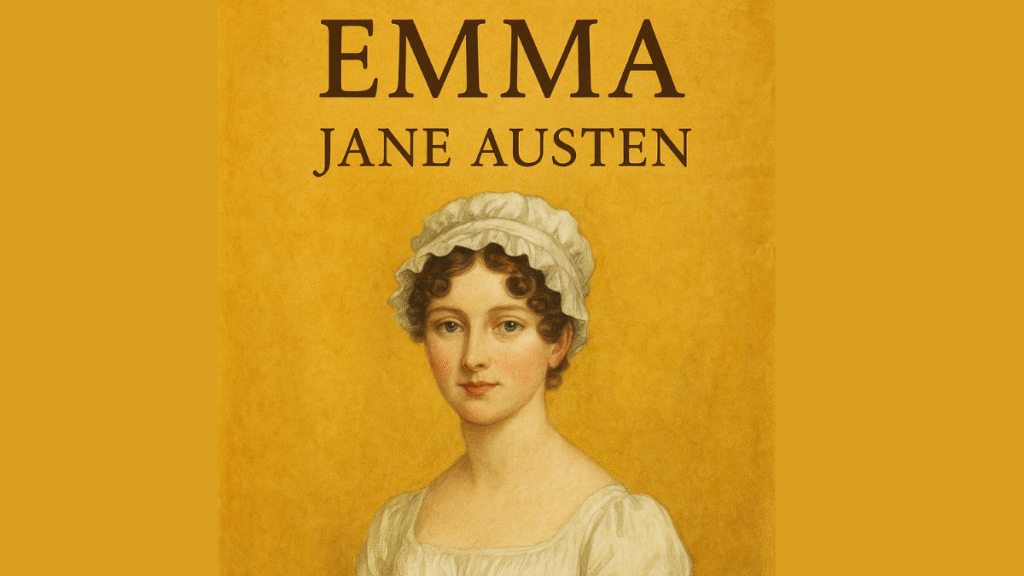
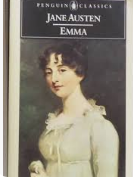
Emma by Jane Austen. A book that will make you think, make you smile, and make you love classic literature even more.
Emma is one of Jane Austen’s wittiest and funniest novels. Published in 1815, it portrays Emma Woodhouse, a rich, clever, self assured young woman who is convinced she has a gift for matchmaking and ends up tangled in a series of romantic misunderstandings. Through her story, Austen explores love, friendship, class differences, and the road to personal maturity, all with a heavy dose of irony.
Today I want to tell you about a book that leaves me, every time I reread it, feeling like I have just been talking with a close friend. I mean Emma by Jane Austen, published in 1815 and considered one of her most brilliant and entertaining works.
The first time I picked up this novel, I expected to find nothing more than a typical nineteenth century romance. What I found was so much more: irony, humor, social observation, and a masterful portrait of human feeling.
Does this happen to you too, where the classics feel intimidating and you wonder whether they will be too dense or too difficult? With Emma the opposite is true. The story flows naturally and pulls you in with layered characters, near comic situations, and a heroine who is fascinating precisely because she is imperfect.
Who was Jane Austen and why did she write Emma?
Before we get into the plot, it is worth pausing on the author for a moment. Jane Austen (1775 to 1817) was an English writer whose work has outlived generation after generation. Despite living in an era when women had few opportunities to develop intellectually, Austen managed to create novels that are now pillars of world literature.
By the time she published Emma, she already had a degree of recognition thanks to books like Pride and Prejudice and Sense and Sensibility. What is interesting, though, is that Austen herself joked that in Emma she had created a heroine whom no one but herself would much like. She had a point: Emma Woodhouse is no flawless protagonist, she is someone full of contradictions with plenty left to learn.
The historical context she was writing in matters too: early nineteenth century England, shaped by class, inheritance, marriages of convenience, and a rigid social order. With her ironic pen, Austen managed to portray that world and question it from the inside.
What Emma is about
The story introduces us to Emma Woodhouse, a rich, quick witted, self assured young woman living in Highbury, a quiet English country community. Emma has a special talent for arranging marriages… or so she believes.
Her meddling nature and her urge to manage the love lives of everyone around her set off romantic tangles, misunderstandings, and situations that look trivial while revealing a great deal about human nature.
Across the novel, we watch Emma go from an arrogant, faintly self centered young woman to someone far more aware of her mistakes and her own feelings. It is a story about learning, about self discovery, and of course about love.
The characters who bring the story to life
One of the things I enjoy most about Emma is its supporting cast. Every one of them plays an essential part in the plot, and they pull smiles, reflections, and even irritation out of you.
- Mr. Knightley: Emma’s great friend and adviser, whose wisdom and patience make all the difference.
- Harriet Smith: naive and endearing, she becomes the object of Emma’s schemes.
- Mr. Elton: the vicar whose storyline with Emma produces some of the funniest scenes in the book.
- Frank Churchill and Jane Fairfax: characters who add mystery and unexpected turns.
Does it ever happen to you that a book stays with you as much for its supporting characters as for its lead? With Emma that happens constantly, at least for me.
Why is it still relevant?
You might be thinking: what can a novel from more than 200 years ago teach me? The answer is: plenty.
Because settings and customs change, while human emotions stay exactly the same.
- Who has not misjudged someone on a first meeting?
- Who has not tried to help a friend and ended up making a mess of it?
- Who has not taken far too long to recognize their own feelings?
That is why Emma still speaks to us today. Austen captured the essence of everyday life with humor, irony, and real sensitivity.
Adaptations of the novel
A book this rich was never going to stay on the page. Over the years it has had multiple adaptations for film and television.
- The 1996 version with Gwyneth Paltrow.
- The 2009 BBC miniseries, which many consider one of the most faithful.
- The most recent one, Emma. (2020), directed by Autumn de Wilde, with a fresh, colorful feel.
Even Clueless, from 1995, is a modern take on this story, set in a Beverly Hills high school. Yes, you read that right! Which says a lot about how versatile the plot is.
Frequently asked questions
Is it hard to read?
Not at all. It is written in the style of its time, yet the narration is fluid, ironic, and entertaining. If this is your first Jane Austen, it makes a good way in.
What does the novel teach?
It speaks to the importance of humility, of owning our mistakes, and of not playing with other people’s feelings. It also reminds us that true love is usually closer than we imagine.
Can you enjoy Emma without having read Austen’s other books?
Absolutely. They share themes and tone, though every Austen novel stands on its own. That said, after Emma you will probably want to read more.
What makes the heroine so special?
The fact that she is not perfect. Emma gets things wrong, she is arrogant and sometimes selfish, yet she also learns, grows, and wins us over in the end. She is a deeply human character.
Final thoughts
Reading Emma by Jane Austen is like sitting down for tea with someone who knows how to tell a story with grace, wit, and truth. It is a novel that mixes romance, irony, and life lessons in a way nobody else quite manages.
If you are after reads that go down easily and still reach you, I also recommend Welcome to the World, Baby Girl! by Fannie Flagg. It will not leave you indifferent.
Have you read Emma, or any other Jane Austen? I would love to know what you think. Tell me in the comments, and if you enjoyed this post, subscribe to the blog so we can keep sharing more reading and reflections together.