The mystery of the cemetery
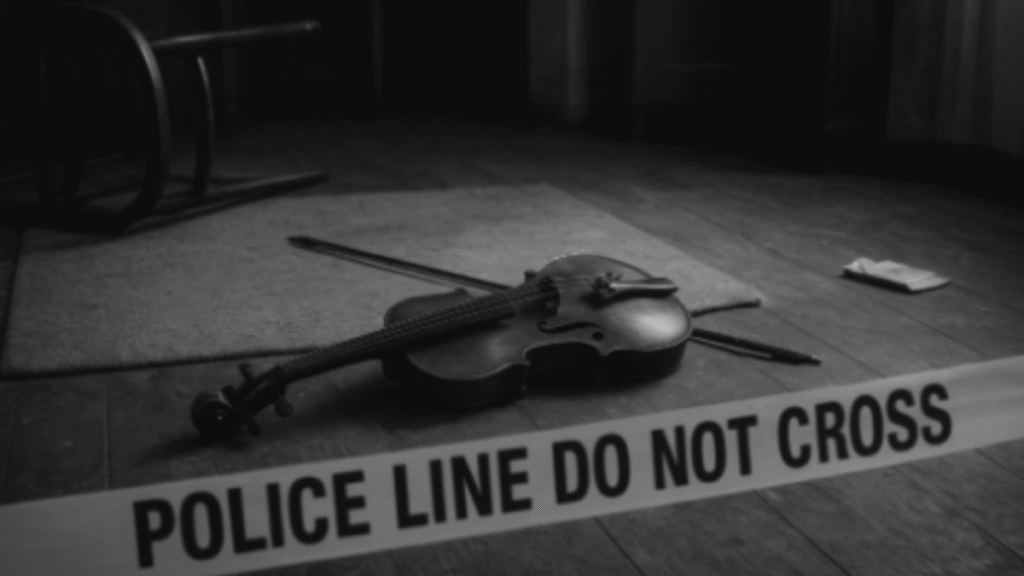
One October morning, the San Eustaquio cemetery woke up with its graves open and its vaults ajar, like a book flipped through in a hurry by invisible hands. The plastic flowers, the ones that beat time by staying obediently bright, were lying on their sides, and the vases, untouched but empty, seemed to be drinking colder air than usual. What was not there, and this is what turned alarm into horror, were the bodies. Not one or two: dozens of graves showed an absence with no trace behind it, as though the burial ground had shrugged off gravity for a few minutes and let its residents go somewhere no map covers.
The news traveled with the speed that bad words have when everyone knows they are true. At 6:15 a.m., the sexton lit the lamp in the ossuary. At 6:20 he called the priest. At 6:28 the local police taped off the main gate. By 7:00 a reporter from this Gazette was already walking up the avenue of cypresses with his notebook open and a proper knot in his tie. “Do not touch anything,” ordered a young officer using the voice of a rookie in charge. “I do not plan on touching the air,” I answered, honestly. There was something in the atmosphere that mixed the hush of a sacristy with the urgency of an ambulance, a blend of Sunday morning and house fire.
The first counts were vague and fussy, the way all counts are before coffee. Then came the list. Then the record cards. Then the silence. Bodies had gone missing from different decades, different sections, different families. There was no clear pattern and no obvious method. The cemetery, which until the day before had been an orderly archive of goodbyes, woke up as a problem with no subject to file it under, an equation with the signs rubbed out.
A short history of the burial ground
San Eustaquio opened in 1878, when the city stopped burying its dead beside the churches for reasons of hygiene and modernity. Chosen with a sense of direction, facing east, they said, so the bodies would greet the morning, the plot was walled off with pale stone and planted with cypresses that learned over the years to stand tall without making a show of it. The earliest headstones, cut from local marble, read now like discreet calling cards with dates, prayers, and the occasional trade: “mail carrier,” “schoolteacher,” “retired sergeant.” The mausoleums of prominent families competed in wrought iron and stylized angels. Nothing on those pages of stone gave any hint that one day the word nobody would be written there without a chisel.
There were, it is true, a few striking episodes the town kept like postcards: the night a dog howled for three straight hours in front of the Olazábal mausoleum, the time two candles lit themselves in an absurd rainstorm, a foggy morning when someone found chalk writing in the chapel that read, “We do not come when you call yourselves, we come when we are named.” Strange graffiti, sure. Every town has its pranksters.
The night before
The evening before all this was a night with no story in it: light wind, mild temperature, a moon that showed up out of courtesy. The night watchman swore he made his rounds as punctually as ever. “The gates were locked. The cats were normal, you know how they are. Not a sound. I am the kind of man who turns around if I hear a wire breathe, and I heard nothing,” he told us. At midnight the chapel clock struck twelve without enthusiasm. At 1:10 a.m., according to a couple who live across from the north entrance, the air turned heavier, “like the street had filled up with smoke that had no smell.” At 1:12 a.m., according to another neighbor, the silence “made a noise.” At 1:15 a.m., nobody remembers anything in particular.
It happened anyway. We found out at six, when the sexton opened the side door and felt the emptiness the way you feel cold without touching ice, by the warmth it leaves on your skin. He went straight to the first vault on his list, part prayer and part dust cloth, and found the door pushed aside. “I thought vandalism,” he told us, “but there were no marks, no mud, no footprints.” What followed was an inventory of absences. Never until that morning had hands, so many hands, learned to count what is missing.
Police and forensic investigation
Then came the yellow tape, the white coveralls, the latex gloves that crackle, the portable lights standing around like stage equipment. The medical examiner, a man as dry as English humor, said very little: “This is not metal theft. This is not simple vandalism. If people did this, they did it carefully and cleanly. Too cleanly.” They took dust samples from the niches, measured the height of every gap, photographed even the snails that had the courtesy not to leave the scene. The technicians looked for pry marks, acid residue, organic traces, fibers. The haul was modest: a bit of cat hair, one bird feather, a speck of soil that could have come off any shoe.
Police checked cameras on the surrounding streets. A pair of shadows crossed twice, twenty minutes apart, always on the sidewalk opposite the cemetery wall. A delivery truck passed at 2:06 a.m., a bicycle with no light at 3:10 a.m. Nothing that deserved the word “suspicious” without an apology attached. In the cemetery’s visitor log, the last entry was from the previous day: a family bringing flowers for a grandfather’s anniversary. All in order. All routine.
The examiner offered a cautious theory: unauthorized transfers to some clandestine storage site. That theory was missing the basic muscle of the real world, though, which is the how. Who, when, through which entrance, with what tools, in what vehicles, with what kind of silence, with what nerves of steel to open dozens of vaults without waking the cats or the neighbors who can hear a glass drop on the floor above? The explanation held up as rational right until you got close to the screws, and then it started asking for magic.
Witnesses: voices that speak softly
Doña Asunción, eighty two years old, a widow in plain black, came over with a bag of bread under her arm and a dignity without any holes in it. “My husband slept right there,” she said, pointing at a gap that somehow looked emptier than the rest. “I come every Friday with red carnations, because he did not like white ones, not even in a painting. Today I am out of carnations and out of a husband. Look at me, though, suddenly I feel married to him again, because I am waiting for him again.” She smiled without asking permission. “Do not take that wrong. A wait can be a home.”
A groundskeeper with clean dirt on his hands told us that the week before he had seen earthworms surfacing in straight lines, like they were following invisible hallways underground. “The others laughed at me, asked if I was seeing snakes. I told them: when the soil makes paths I did not dig, the soil knows something.” The sexton, more a man of the rosary than of metaphor, added: “All I know is that when I counted the candles yesterday, I had two left over. I do not make mistakes with candles. Somebody came to pray very late. Or very early.”
The children, who always grasp what adults will not name, drew the cemetery at school in brown and gray pencil. In some of the drawings the graves had wheels. In others, small wings. In one, which the teacher put in her drawer the way you put away a compass, a rope came out of every vault. The ropes did not go up to the sky. They went to other houses.
Timeline of the findings
- 6:00 a.m. The sexton opens up. He senses the emptiness. First vault found ajar.
- 6:20 a.m. Priest and police notified. Main gate closed as a precaution.
- 6:40 a.m. Patrol arrives. Initial count. Fifteen graves affected.
- 7:05 a.m. This Gazette arrives. New counts raise the number of anomalous gaps to twenty seven.
- 7:30 a.m. Perimeter taped off. First neighbor statements. A “heavy silence” was heard between 1:10 and 1:20 a.m.
- 8:15 a.m. Medical examiner arrives. Photographs, samples, inspection. No damage to any lock.
- 9:40 a.m. Preliminary report to city hall. Talk of a “possible clandestine removal.” Denials pour in.
- 10:30 a.m. Limited access allowed to family members, with escorts. First tears, first nervous laughter.
- 11:50 a.m. Near final count: thirty four gaps with no remains. Decision made to close until further notice.
Theories, and their catalog of impossibilities
The quiet looting theory. Some argue that organized groups go after valuables or remains for illegal purposes. What is missing is evidence, means, and motive: no pry bars, no vans spotted, no useful routine. Why open so many graves when greed knows how to work with a scalpel instead of a net?
The underground theory. An amateur geologist suggests that groundwater, shifts in the clay, air pockets, or well organized insects could have “rearranged” the resting places. The priest asks, with no sarcasm at all, whether the currents also open and close vault doors with the manners of a butler.
The ultra fast paperwork theory. Forms, stamps, ordinances. Nothing. City hall denied it with impeccable brevity. No transfers, no exhumations. “If somebody signed off on this, they signed in invisible ink,” said one official, allowing himself the smallest amount of humor.
The summons theory. This one, the softest and the sharpest, the one that looks for reasons instead of culprits, says the cemetery did not lose bodies, it loaned them out. That there was some collective naming, a kind of prayer without a priest, that sent the dead to visit the houses where they still had one sentence left to say. That they will come back once they find room on the shelf of time. It is beautiful, we can admit that much. Sometimes beautiful gets you through a scare better than accurate does.
A midnight expedition
With permission, this Gazette spent an entire night at San Eustaquio. The chapel smelled of very old wax and of humble soap. Cypresses make no noise, they do not need to. The gravel crunches, gravel being honest, and the wind, when it passes through, does not apologize. At 12:03 a.m. the chapel clock decided to stop for exactly three seconds, as if checking whether it could still get away with a whim. At 12:11 a.m. the air dropped a degree. No door moved. No slab lifted. I sat on the stone bench beside the foremen’s mausoleum. I opened my notebook. I did not know what to write. I heard, and this is extremely subjective, a word without vowels, a breathed consonant, the way it sounds when you blow out a candle and the smoke has grammar.
At 1:17 a.m., two cats planted themselves in front of a vault and stared at the seam like they were about to charge admission. They left with the dignity of creatures who know they are watching something that cannot be said out loud. At 2:00 a.m. the sexton, who would not sleep that night or any other night that week, brought two thermoses of coffee. We traded stories. He told me about a man who asked to be buried with a comb, just in case. I told him about a woman who left a copy of a key in her family vault, and nobody has ever worked out what door it opens. We laughed guiltily. We did not fall apart. We waited for dawn with the patience of an old barber.
We saw no miracles. We saw poor little signs, which is the thing that most resembles the truth. Three out of season fireflies, a candle that went out with no draft, a name whispered by a woman leaving flowers who then said she had not spoken. Even so, by sunrise the place did not look like it had the day before. The empty gaps were the same gaps, but the town had learned to look at them without falling in. The horror had turned into work: searching, recording, taking inventory, keeping people company, praying or not praying, but being there.
Files, papers, and the clerk of 1902
In the municipal archive we found a notebook from 1902 written in the careful hand of a diligent clerk. A note in the margin mentioned “nighttime movement of graves, for reasons it is better not to record.” It reads like gallows humor, and yet there were stamps and signatures. On another page the same clerk added: “Nobody is missing. What is missing are the customs.” In 1937, another note: “Openings with no key. Silence ordered to prevent panic. Prayers for the dead said.” In 1959: “Carts before dawn. The sexton drinks.” You cannot write history out of ironies, but the trail is there. Every so often the cemetery makes a gesture the town does not know where to file.
The newspaper archive turned up a case from the seventies. “The stones have turned a little,” ran one happy reporter’s headline. “Maybe the ground,” said another. “Maybe time.” The photographs had that noble grain that makes small misfortunes look beautiful. A young neighbor recognized herself in a sixties photo with a high bun and a plaid skirt. “That day I promised myself I would never mourn anyone again without first telling them what I had kept quiet,” she told us when she saw us looking through the page. She kept the promise. She is eighty now and only cries when there is a soundtrack.
The flowers and the birds, a small theory
The neighborhood florists noticed something: that day they sold more yellow bouquets than ever. “People usually go for white or red. Today, yellow. Like they needed sunlight in the shape of a petal,” said a woman with hands like needles. Up in the trees, the magpies that have learned to negotiate with the shine of the living stopped coming around. “They leave when there is noise, meaning our noise, and they come back when there is rest, meaning the rest of the dead. This week they have not come back. Or not yet,” noted an ornithologist with rain in his accent.
Small things always explain better than big ones. Some weeks a cemetery changes the way it holds flowers and the way it holds birds. Think about it too hard and you turn into a poet. Write it down precisely and you turn into an accountant of the mysterious. Both are useful, in their moments.
This Gazette’s advice, while we wait for an explanation
- Do not force locks. Do not push on doors. Do not invent evidence. Fear handles the metaphors on its own.
- If a gap near you belongs to someone of yours, go look for the living who were already missing. Conversations sometimes arrive by unusual roads.
- Do not turn grief into a tourist stop. Keep your phone in your pocket. Silence is heritage too.
- Bring flowers if you feel like it. Do not bring them if you do not. Flowers have never solved a case, though they do give the hands something to do.
- If you hear something, write it down. Collective memory gets built out of recollections that read like notarized statements written in pencil.
A visit to the houses
On the third day, this Gazette went around to five homes of families with an empty gap. In two of them, someone said they had dreamed of a dining room full of light where a person sat down “in the usual spot, but with no sound of the chair.” In another, a father read out loud a letter of apology he had kept in a drawer for years, and when he finished he realized he did not know who it was addressed to. Maybe himself. In a fourth house, a girl who never met her grandmother set a cup upside down on the table “so nobody fills it without asking.” In the fifth, a woman turned on the oven with a loaf her mother had taught her to knead and said, “If they come back, let them smell bread.”
The town, which usually stumbles from one hurry to the next, found in this mystery a gentle kind of exercise: visiting, asking, listening without correcting, keeping company without bringing a spoon to stir something that is not asking for broth. Without any big speeches, people rediscovered the old science of being a neighbor: carrying soup over in a container, leaving notes under a door, stopping by to water the plants of someone who has no strength left for their own hands.
What if they do not come back?
The question, whispered at first, got loud in week two. What if they do not come back? The authorities answered with protocols and the poets with secular prayers. Some people wanted San Eustaquio closed for a month of inspections. Others demanded it be opened every morning with brass bands and trumpets, in case the absent are fond of ceremony. City hall chose the middle: reinforced closure at night, daytime opening with a register for family members, a daily update at 1:00 p.m., counseling at the community center for anyone who wants it. Nobody complained much. When a scare is general, courtesy becomes public policy.
The priest, with the diplomacy of a well worn cassock, decided to hold a service for the dead with no names read out, “so we do not call them too loudly.” A decent atheist from the neighborhood brought candles and said, “A candle does not believe. It gives light.” The gesture was accepted the way you accept a glass of water. There was no visible miracle. There was a hug.
A provisional epilogue at the gate
I am writing these lines on the wrought iron bench beside the main gate. At this hour the cypresses make better columns than any government building. Fifteen days have passed since the morning of the emptiness. There are no cameras now. No tape. There is a new list taped up: phone numbers for support, opening hours, and one line that reads, “We are not taking anyone away, we are looking for everyone.” The sexton points it out to me. We have become friends over predawn hours and lukewarm coffee. He looks at the line and nods. “That is right. We never take anyone away here. Here we look after them a different way.”
The flowers are back where they belong, with the white ones losing ground to the yellow, and I do not know why. The vases are drinking clean water. The cats have their unhurried rounds back. The gaps, the ones still waiting for an answer, look less like gaps when there is somebody standing in front of them with folded hands or with pockets full of stale bread for the birds. The town, which trembled with embarrassment on the first day, trembles better now, outward instead of inward. It trembles in hugs, in errands, in “I will go with you,” in “I will lock up,” in “I will keep watch.”
The mystery of the cemetery, like every well mannered mystery, has ended up teaching us less about the dead than about ourselves. What has gone missing is not the bodies, time will say or will not say about that. What has gone missing is the smug certainty we used to carry as we walked among the marble. We step more slowly now. We read more slowly. We say names with less of a rush. Sometimes saying a name is what takes a whole life to put back in its place.
If anyone asks what I think, and they do ask, I will answer with a formula that is no good for press conferences but works fine in handwriting. I believe there was a movement we did not know how to measure. That a cemetery is a more complicated organism than a plan full of numbered squares. That some dates call out to each other. That some gaps are not holes but pauses. That some of the dead only move when somebody, without meaning to, gives them the permission of a tear. That they will come back, if coming back means anything. That in the meantime we should not run short of bread, or lukewarm coffee, or the decency to close the gate the way you close the door of a bedroom where someone is sleeping. Because that is what a cemetery is when a town behaves itself, a bedroom made of stone where nobody slams anything.
What do you think happened at San Eustaquio? A clean robbery, a summons, an error in time, a passage into the houses? Share your theory in the comments, and your memory too if you feel like it. At The Crime Gazette, every reader is an investigator.
Do not miss the latest from our Gazette.
The chilling mystery of the cemetery: the most unsettling chronicle in The Crime Gazette