Discover The Vegetarian by Han Kang, a startling novel: unsettling, poetic, and built around obsession, the body, and freedom. My personal take, the background you need, and why you should read it.
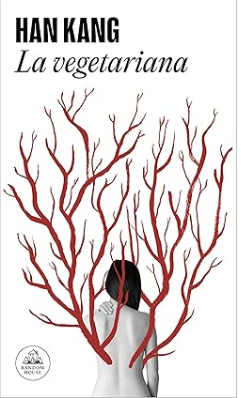
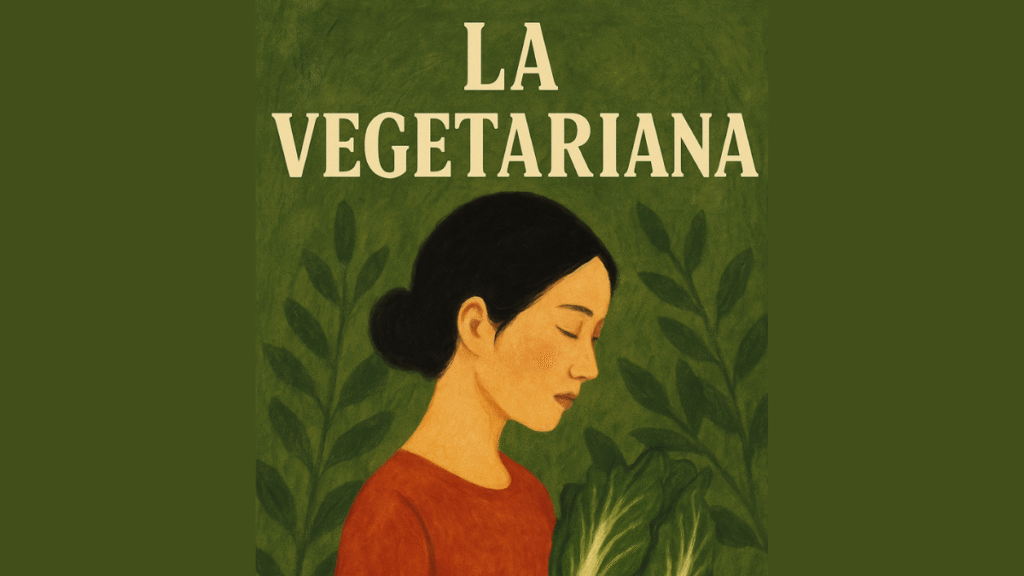
“The Vegetarian” is an unsettling, deeply poetic novel that tells the story of Yeong-hye, an ordinary woman in Seoul who decides to stop eating meat after a bloody dream. That simple, radical gesture shakes her marriage, her family, and her own identity to the core, exposing obsessions, violence, and repressed desire. In a hypnotic, disquieting style, Han Kang invites us to question the limits of the body, of freedom, and of madness.
A little about the author: Han Kang
Before I dive into my experience with The Vegetarian, I want to tell you a bit about its author. Han Kang was born in Gwangju, South Korea, in 1970. She is the daughter of the writer Han Seung-won, so literature was with her practically from the cradle.
She started out publishing poetry, then moved into fiction. Today she is regarded as one of the most important South Korean writers, known for a style that is elegant and brutal at the same time. Her work has been translated into more than 20 languages, and The Vegetarian won her the prestigious Man Booker International Prize in 2016.
In October 2024 she went a step further and was awarded the Nobel Prize in Literature, becoming the first South Korean writer and the first Asian woman to win it. The Swedish Academy recognized her intense poetic prose that confronts historical traumas and exposes the fragility of human life.
What is The Vegetarian about?
Broadly speaking, The Vegetarian tells the story of Yeong-hye, an apparently ordinary woman who one day decides to stop eating meat after a bloody dream. What begins as a personal decision soon sets off chaos in her family and in society around her.
Reducing the book to its plot does it a disservice, though. This novel is not only about becoming a vegetarian. It is about the body as a battlefield, about control, desire, quiet violence, and the price you pay for trying to be free.
The story is split into three parts told from different perspectives: Yeong-hye’s husband, her brother in law, and her sister. That device leaves the voice of the main character almost silenced, as though her body were speaking louder than she is.
The context: South Korea and repression
One thing that helped me understand the book better was reading up on South Korean society. Social and family pressure there is enormous, hierarchies are respected rigidly, and the collective weighs far more than the individual.
So Yeong-hye’s silent rebellion is not simply a dietary whim, it is an open challenge to the established order. Her refusal to eat meat becomes a political act, even though she never intends it that way. Her husband and her family cannot tolerate it, because it breaks every invisible rule of what is acceptable.
A few striking passages
To give you a sense of the novel’s force, I want to share a couple of lines I underlined with enthusiasm, and with a shiver:
“I have nothing to do with meat.”
A simple sentence that holds Yeong-hye’s entire declaration of intent.
“Why are they so afraid of a body that chooses not to kill in order to eat?”
Those words rattled around my head for days, because at bottom the novel is one enormous metaphor about violence and power.
Why I think you should read The Vegetarian
Because it is a book that shakes you, unsettles you, and leaves a mark. If you are after a simple, gentle story, this is not your book. If you are drawn to literature that explores the darkest corners of being human, that questions what we call “normal”, and that forces you to think even when you would rather not, then go for it.
It is also a short novel, barely 190 pages in the Spanish edition, so it reads fast, though you will probably need to stop now and then to digest it.
My personal experience with the book
Honestly, this book left me bewildered, shaken, and deeply moved all at once. It had me completely from the first few pages. It is not a comfortable read, far from it. Some scenes are almost unbearable and made me stop, breathe, and carry on. That is exactly why I find this book so necessary.
It made me think about how apparently harmless decisions can be seen as a threat by the people around us. About the right, or lack of it, to decide what we do with our own bodies. About the limits of empathy too: do we really understand people who step outside the norm?
Han Kang’s prose also has something hypnotic about it. Her images are powerful and strange, sometimes gorgeous and sometimes completely disturbing. It felt like reading a cruel fairy tale wrapped in silk.
Other Han Kang books you might like
If you finish The Vegetarian wanting more, and fair warning, her style can be addictive, I recommend:
- Human Acts, a brutal novel about the 1980 Gwangju massacre, where hundreds of civilians were killed. It is a choral, moving, absolutely necessary book.
- The White Book, a short, intensely poetic work circling grief and absence, using the color white as its thread.
Two other novels you might enjoy are East of Eden and The Good Earth, the latter set in rural China. Take a look at them on the blog if you feel like it.
If this post was useful to you and you feel like saying thanks, you can buy me a virtual coffee here.
What about you, are you up for reading it?
I would love to know whether you already knew The Vegetarian, whether it is on your to be read pile, or whether it does not appeal to you at all. What do you think of novels like this one that push us out of our comfort zone?
Leave your thoughts in the comments, and if you enjoyed this post, share it or subscribe to the blog so you do not miss more reviews of books that stir you to the core. See you in the next one!