A deep, emotional analysis of The House of the Spirits by Isabel Allende. Characters, symbolism, historical background, magical realism, and literary legacy, explained up close and thoughtfully in a way that connects with the present.
Some novels you enjoy while they last and then shelve as a pleasant memory. Others get under your skin and change the way you understand relationships, power, memory, and family.
The House of the Spirits belongs firmly in the second group. It is not only a family saga set in a Latin American country going through political upheaval. It is an emotional experience that forces you to look straight at the things we usually prefer not to look at.
Every time I come back to this novel I find something different. A gesture I missed before, a line that weighs more now, a decision I once judged harshly and now understand better.
That ability to grow along with its reader is one of the reasons The House of the Spirits still reads today as though it had just come out.
Isabel Allende did not write a comfortable story. She wrote an honest one. Love and violence live side by side in it, along with tenderness and the abuse of power, spirituality and political brutality.
That mixture is not designed to shock, it is designed to reflect a complicated reality where nobody is entirely innocent and nobody is entirely a monster.
In this post I want to walk you through every angle of the novel. An analysis of The House of the Spirits cannot stop at summarizing the plot. It has to sit with the characters, the historical background, the magical realism, the feminism running through the book, the symbolism of the house, and memory as an act of resistance. Because this novel is, above all, a conversation between generations.
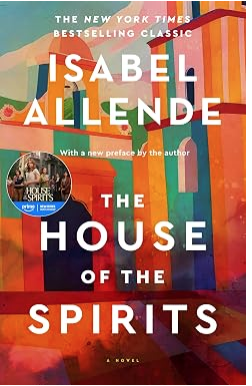
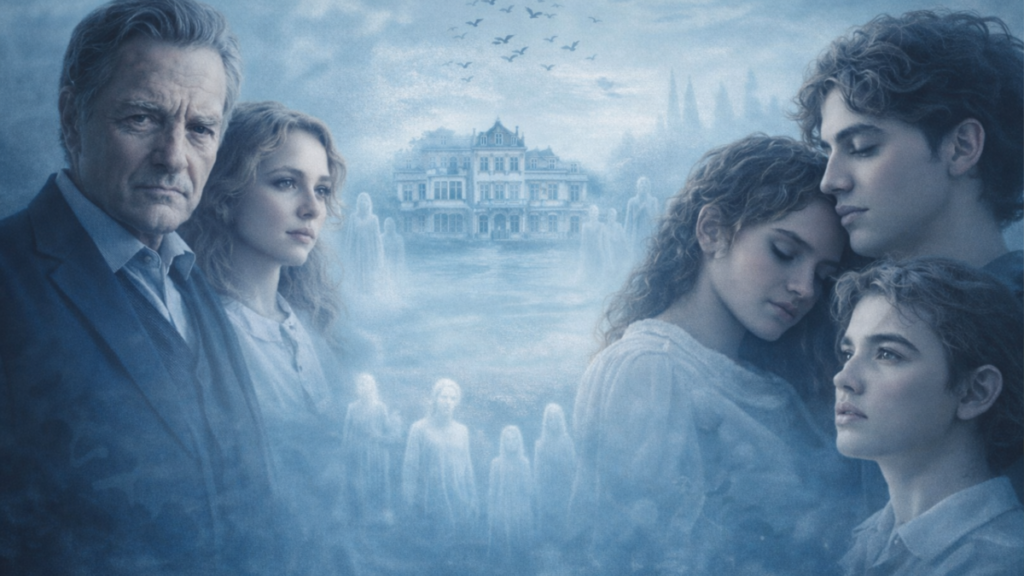
The House of the Spirits follows the Trueba family across several generations, from Clara’s dreams and visions to the consequences of Esteban Trueba’s decisions. Set in a Latin American country modeled on Chile, the novel blends history, politics, love, and tragedy with elements of magical realism.
Through unforgettable characters and complicated relationships, Isabel Allende builds an intense family saga that reflects the social and political upheaval of an entire country. It is a story about memory, power, injustice, and the strength of women to change the fate of their families.
This post contains affiliate links. If you buy through them, you support my work at no extra cost to you.
What The House of the Spirits is about
At first glance, The House of the Spirits tells the story of the Trueba family across several generations. Reducing it to that would be an oversimplification, though. What Isabel Allende builds is an intimate chronicle interwoven with the political history of a country transforming itself violently.
The novel opens with Esteban Trueba, a young man, ambitious and obsessed with climbing socially. His forceful character and his need for control will shape the fate of everybody around him. Facing him is Clara del Valle, a mysterious, sensitive woman connected to the spirit world since childhood. Clara moves objects with her mind, converses with spirits, and seems to inhabit a different plane from Esteban’s rigidity.
Their marriage is not only the union of two people. It is the collision of two ways of understanding the world. Esteban represents order, property, control, and patriarchal authority. Clara stands for intuition, memory, spirituality, and a quiet resistance that does not need to impose itself in order to be powerful.
Through their children and grandchildren, the novel travels across decades of social change. The country moves toward a progressive government promising deep reforms. Tension grows, polarization intensifies, and finally the military coup arrives. Repression settles into daily life, and the family’s wounds mix with the country’s.
What makes this story special is not only what happens, it is how it is told. The house becomes the physical and symbolic center of the narrative. It is where they love, hate, reconcile, and betray each other. It is the space where the ghosts of the past live alongside the living.
Analyzing The House of the Spirits means understanding that nothing happens in isolation. Intimate decisions carry political consequences. The power structures inside a home mirror the power structures of a country.
Isabel Allende and the emotional origin of the novel
To grasp the depth of this book, it helps to stop on where it came from. Isabel Allende started writing The House of the Spirits as a letter to her dying grandfather. That initial intention shapes the whole tone. It was not born as a planned literary project, it was born as an urgent need to preserve memory.
The experience of exile shaped it decisively. After the 1973 military coup in Chile, Allende had to leave the country. That rupture runs through the novel. The sense of loss, of fracture, of longing does not feel manufactured. It feels real because it came from something she lived.
Published in 1982, the novel was Isabel Allende’s literary debut and an immediate success. Plenty of critics compared it to One Hundred Years of Solitude for its family structure and its use of magical realism. Allende’s voice is different, though. Her storytelling is more emotionally direct. The female perspective here is central rather than peripheral.
Any analysis also has to account for the fact that it was written at a moment when Latin American women’s voices did not have anything like the visibility of their male contemporaries. The House of the Spirits carved out a space of its own inside Latin American literature.
Magical realism as a form of truth
One of the novel’s most recognizable features is its magical realism. Clara has supernatural gifts from childhood. She predicts events, moves objects, talks with spirits, and writes everything down in notebooks that will later be essential for reconstructing the family history.
What is interesting is that these elements never get presented as strange inside the world of the book. Nobody is especially scandalized. The magical is part of daily life. That natural coexistence between the visible and the invisible is a key trait of Latin American magical realism.
Here, though, the magical is not aesthetic decoration. It works as an alternative form of knowledge. Clara understands the world through intuition and memory, while Esteban does it through reason and material power. The tension between those two ways of seeing runs through the entire story.
Magical realism here is not trying to escape political reality. On the contrary, it widens the perception of what is real. It suggests that memory and spirituality are as valid as documented facts. Any analysis of The House of the Spirits has to recognize that the magical is a narrative tool for exploring wounds that cannot always be expressed rationally.
Esteban Trueba, the patriarch full of shadows
Esteban Trueba is one of the most complicated characters in the novel. He is neither a flat villain nor a tragic hero, he is a man deeply shaped by his era, his upbringing, and his obsession with order.
From a young age he works the Las Tres Marías estate to rebuild the family fortune. There he wields power brutally. He rapes peasant women, imposes punishments, and feels entitled by his social position. That violence is not a narrative accident. It reflects a power structure that normalizes abuse.
Esteban loves Clara, and his love is contaminated by possession. He cannot stand losing control. When Clara decides to withdraw emotionally after a physical assault, Esteban runs into a form of resistance he has no idea how to handle.
Over time he grows old. He watches the world change and watches his own convictions harden against a society that keeps evolving. His support for the military coup comes out of fear of losing his privileges. Later, he understands that the forces he helped consolidate do not respect any limits.
Analyzing him surfaces something uncomfortable, which is that violence does not always recognize itself as violence. Esteban believes he is acting in defense of order and stability. That self-justification is one of the most powerful portraits of authoritarianism in the book.
Clara del Valle: memory, spirituality, and quiet resistance
Clara is Esteban’s counterweight. From childhood she shows extraordinary abilities, and her greatest strength is not in the supernatural, it is in her serenity.
Clara does not fight Esteban’s power head on. She withdraws, she creates distance, she refuses to argue once she sees that dialogue is useless. That withdrawal is not weakness. It is her form of resistance.
Her notebooks are fundamental. In them she records both the ordinary and the extraordinary. Writing becomes an act of preservation. Thanks to that written memory, later generations will be able to reconstruct what happened.
Clara represents a female lineage that runs through the novel. Her way of being in the world is not loud, and it leaves a mark. Without Clara there would be no story possible, because without memory there is no telling.
Blanca and Pedro Tercero: love as a challenge to the established order
The relationship between Blanca and Pedro Tercero is not simply a romance inside the novel. It is a crack in the system, the fissure that reveals Esteban’s power is not absolute, however much he believes it is.
Blanca grows up under the watch of an authoritarian father who tries to shape her fate according to the social codes of the period. Her education, her behavior, and her friendships are all conditioned by a rigid class structure. Pedro Tercero, in contrast, belongs to the peasant world of Las Tres Marías. He is the son of workers and, from an early age, watches injustice with a mix of rage and clarity.
Their love begins in childhood, in territory where class differences do not yet weigh so heavily. Once they grow up, though, the relationship becomes a direct threat to the patriarchal, class bound order Esteban represents.
Pedro Tercero is not only the forbidden lover. He is a man who starts questioning the system, spreading ideas about equality, singing revolutionary songs, and talking about social justice. His voice unsettles the landowners and lights up hope among the workers.
In choosing him, Blanca is not only choosing a man. She is choosing a different model of the world from her father’s. In The House of the Spirits, love is never neutral. Loving means taking a side, even when the characters are not fully aware of it.
The violence Esteban uses to try to separate them reveals how much power fears mixture, the crossing of borders, the breaking of hierarchies. Analyzing this relationship shows how the intimate and the political inevitably tangle together.
Alba: memory as an act of resistance and redemption
If Clara embodies spiritual memory and Blanca emotional rebellion, Alba represents historical consciousness. She is the granddaughter who inherits not only the blood but the wounds and the notebooks.
Alba grows up in a country already fractured. She lives through the political fervor, the hopes for change, and later the brutality of the repression. Her detention and torture under the dictatorship make up one of the hardest passages in the novel.
Isabel Allende does not soften that part. The violence is shown without spectacle and with an intensity that makes you uncomfortable. Torture is not a narrative device for generating drama, it is a historical reality that marks generations.
What makes Alba a key character is not only her suffering, it is what she decides afterward. She has reasons to hate, to take revenge, to keep the resentment going. She chooses to remember and to write instead.
That choice is profoundly transformative. Memory, instead of becoming a weapon of destruction, becomes a space for understanding. Alba decides to break the cycle of hatred that has run through her family.
Alba stands for the possibility of healing through language. Writing does not erase the pain, it organizes it, understands it, and keeps it from turning into future violence.
The political background: dictatorship, polarization, and social fracture
The country is never named explicitly, and the parallel with Chile is obvious. The rise of a leftist government, the social reforms, the conservative backlash, the military coup, and the dictatorship that follows make up the novel’s historical backdrop.
The House of the Spirits is not a political treatise. It is a story where politics walks into the kitchen, into the bedroom, into family conversations. Analyzing the novel reveals how polarization seeps, bit by bit, into daily life.
Esteban supports the coup convinced it will bring stability. He believes order has to be imposed against chaos. His view is the view of plenty of privileged sectors afraid of losing their positions. In time, he discovers that the regime he helped consolidate does not distinguish between allies and enemies when it comes to exercising control.
The novel shows something unsettling. Dictatorships do not appear out of nowhere, they are built on preexisting fears, prejudices, and inequalities. Unresolved social tension becomes fertile ground for authoritarianism.
Today, this remains deeply current. Democratic fragility and polarization are not subjects belonging to the past. The book is a quiet warning about how easy it is to normalize hateful rhetoric once fear gets prioritized over dialogue.
The symbolism of the house as body and as country
The house Esteban builds is more than a building. It is a space that grows almost chaotically. It expands with unnecessary rooms, long corridors, and secret corners. That architecture reflects the patriarch’s character. Ambitious, expansive, controlling.
Over time the house fills up with memories, accumulated objects, and invisible presences. The spirits never leave the place, they stay. Memory does not go away, it moves in.
The house can also be read as a metaphor for the country. Solid and prosperous at first, later fragmented and vulnerable. The physical cracks run alongside the emotional and political ones.
When the house empties out or transforms, we understand that the real legacy is not material. What remains are the stories lived inside it.
Feminism and what gets passed between generations
One of the most powerful aspects of the novel is how it looks at women. Clara, Blanca, and Alba are not secondary characters orbiting male power. They are the narrative axis.
Each represents a different form of resistance. Clara through spirituality and active silence. Blanca through desire and emotional disobedience. Alba through political consciousness and written memory.
Misogynist violence is present without ever becoming spectacle. It is part of a structure that conditions decisions and limits freedom. Isabel Allende exposes that structure with no need for explicit speeches. The indictment comes out of the experience being narrated.
The female lineage holds the continuity together. While the men obsess over power and control, the women hold the memory and the rebuilding. What passes between generations is not only biological. It is emotional. Silences, fears, courage, and decisions all get inherited.
Love as a force that builds and destroys
In The House of the Spirits, love never shows up as an easy solution or a narrative reward. It is a complicated energy that, depending on how it gets used, can heal or devastate.
Esteban’s love for Clara is full of contradictions. He admires her, needs her, idealizes her at certain moments. He also tries to dominate her. His way of loving is shot through with the fear of losing control. That mixture turns the bond into a tense space where tenderness lives alongside violence.
Clara loves differently. Her love is not built on possession, it is built on acceptance. When she decides to withdraw emotionally after an assault, she is not being cold. She does it because she understands there are lines that cannot be crossed without consequences. That decision marks a before and after in the family dynamic.
The love between Blanca and Pedro Tercero is passionate, impulsive, and resilient. It survives distance, censorship, and fear. It is not an ideal love, it is full of risk and sacrifice. It represents the possibility of choosing over and above what society imposes.
With Alba, love takes on a more consciously political dimension. Her bond with Miguel runs on shared ideals. Both of them dream of a different country. When the repression breaks in, that love collides with the rawness of reality.
The emotional inheritance of trauma
Violence in this novel does not end when the specific episode does. It settles into collective and family memory. It gets passed from generation to generation.
Esteban rapes and abuses at Las Tres Marías. That abuse does not disappear over time. It comes back as resentment, as illegitimate children, as emotional fractures that resurface years later.
Political repression does not stop at the moment of the coup either. It leaves marks on bodies and on minds. Fear becomes habit. Distrust becomes normal.
Isabel Allende does not present trauma as something abstract. She shows it in everyday gestures, in uncomfortable silences, in looks that avoid a memory. The real conflict is not only political, it is emotional.
The inheritance is not exclusively negative, though. Tools of resistance get passed down too. Clara leaves her notebooks and Alba decides to write. That continuity is what allows pain to turn into something learned.
The novel poses a quiet question. What do we do with the memory we receive? Do we keep it going as resentment, or turn it into awareness?
Compared with the Latin American Boom, and building a voice of her own
When The House of the Spirits came out, comparisons with One Hundred Years of Solitude were inevitable. Both novels tell family sagas, use elements of magical realism, and portray deep political transformation.
There are significant differences, though. Gabriel García Márquez builds a mythic universe where time seems circular and history repeats with an almost legendary logic. Isabel Allende writes from the experience of exile and from a much closer historical memory.
The female dimension in The House of the Spirits is central. The women are not symbolic or secondary figures. They are narrators, witnesses, and agents of change. The female lineage structures the whole narrative.
The connection to recognizable historical events is also more direct. The country goes unnamed, and the military coup and the repression are clearly identifiable. The novel does not hide behind metaphor. It takes a position.
That mix of magical realism, political indictment, and intimate feeling creates a voice of its own. Isabel Allende is in conversation with the Latin American Boom without dissolving into it.
Why it still speaks to us: a novel that keeps asking questions
Reading The House of the Spirits now does not produce a sense of historical distance. It produces unease. The tensions it describes are still present in plenty of societies.
Political polarization, democratic fragility, the rise of authoritarian rhetoric, and the normalization of certain kinds of violence are not closed subjects. The novel shows how fear can justify extreme decisions and how power can erode rights in the name of order.
On a personal level, the debate about historical memory is as relevant as ever. Does remembering open wounds, or does it keep them from happening again? The novel argues clearly for memory as an act of responsibility.
Its feminist perspective holds up completely too. The indictment of structural violence and the vindication of female lineage are still central to the cultural conversation.
If you do not have it on your shelf yet, you can get it on Amazon.
Criticism and controversy
Every influential book generates debate. Some critics have pointed out that the novel has moments of excessive sentimentality. Others have questioned how stylistically close it sits to García Márquez’s magical realism.
Its political positioning has been debated too. Some readers feel the perspective is too clear and leaves no room for ambiguous interpretation.
That clarity is part of its identity, though. Isabel Allende writes from a specific experience. She is not trying to offer neutrality, she is offering a committed point of view.
The film adaptation also split opinion. Some felt it failed to capture the emotional and symbolic depth of the novel.
Despite all this, the book’s staying power demonstrates its impact. It is still studied, still recommended, still read with real intensity.
You can get it on Amazon.
Frequently asked questions about The House of the Spirits
Is it suitable for young readers?
It can be read in late adolescence, though its emotional and political complexity lands better with some maturity. This is not light reading.
Can you read it without knowing the historical context?
Yes, the family story works on its own. Knowing the Latin American political context does enrich the interpretation, though.
Is it a feminist novel?
The book never uses explicit rhetoric, and its structure and its development of female characters make it a novel deeply shaped by a feminist perspective.
Does magical realism dominate the plot?
It does not dominate, it coexists with the historical and emotional dimension. The magical is woven into everyday life.
Is it worth rereading?
Rereading offers new shades. Characters who seemed secondary take on weight, and decisions you once judged harshly start to make a different kind of sense.
Why this novel changes you
The House of the Spirits is not only a family saga and not only a political novel. It is a story about how the past shapes the present and about how memory can be an act of courage.
Across its pages, a mosaic of characters unfolds who love, get things wrong, cause harm, and look for redemption. Nobody here is entirely white or entirely black.
The novel raises uncomfortable questions. What responsibility do we carry toward the structures that benefit us? What do we do with inherited pain? Is it possible to break the cycles of violence?
Every reading leaves a different impression. Sometimes the love story weighs more. Other times the political backdrop hits hardest. Either way, it leaves a mark.
I want to know how you experienced it. Who did you connect with most? Which part was hardest to read?
I will be reading you in the comments.