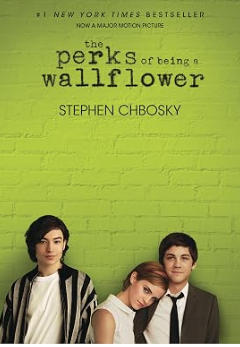
An intimate, honest, moving journey about growing up, healing, and learning to love without fear. Discover the real perks of being a wallflower through the story of Charlie, the narrator of The Perks of Being a Wallflower by Stephen Chbosky.
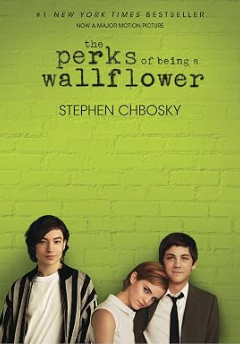
The Perks of Being a Wallflower is an intimate, honest, deeply human novel about adolescence, friendship, and the search for identity. Through letters written to a stranger, Charlie, a sensitive and introspective kid, tells the story of his freshman year while he tries to work through trauma, figure out who he is, and learn to love without being afraid. A story about growing up, healing, and embracing difference that has already become a modern classic.
This post contains affiliate links. If you buy through them, you support my work at no extra cost to you.
When a book finds you right when you need it
Some books you read and enjoy, and then there are the ones that show up at the exact moment your soul needs them. For me, The Perks of Being a Wallflower was one of those.
I found it without looking, in a small bookstore, in a pile of young adult novels. I remember opening it at random, reading a couple of lines, and feeling something odd, a kind of knot in my chest. It was as if somebody had put into words everything I had felt in silence more than once. From that day on, the book turned into a kind of shelter.
One of those you go back to when you feel a little out of place, when the world weighs on you, or when you need somebody, even a fictional somebody, to remind you that you are not alone.
What The Perks of Being a Wallflower is about
Stephen Chbosky’s novel came out in 1999, though its fame took off years later, above all with the 2012 film adaptation. It tells the story of Charlie, a shy, sensitive, deeply observant teenager starting his freshman year of high school while trying to deal with a tragedy in his past. The story is told in letters. Charlie writes to someone we never meet, telling that person his thoughts, his fears, and the experiences that keep changing him.
Along the way, Charlie meets Sam and Patrick, siblings by blood and by soul, who take him into their group and show him there is a place for everybody, including the people who do not feel part of anything.
Between the parties, the songs, the confessions, the crushes, and the wounds, Charlie learns something we all need reminding of, which is that feeling different is not a defect. It is a way of seeing the world with more depth.
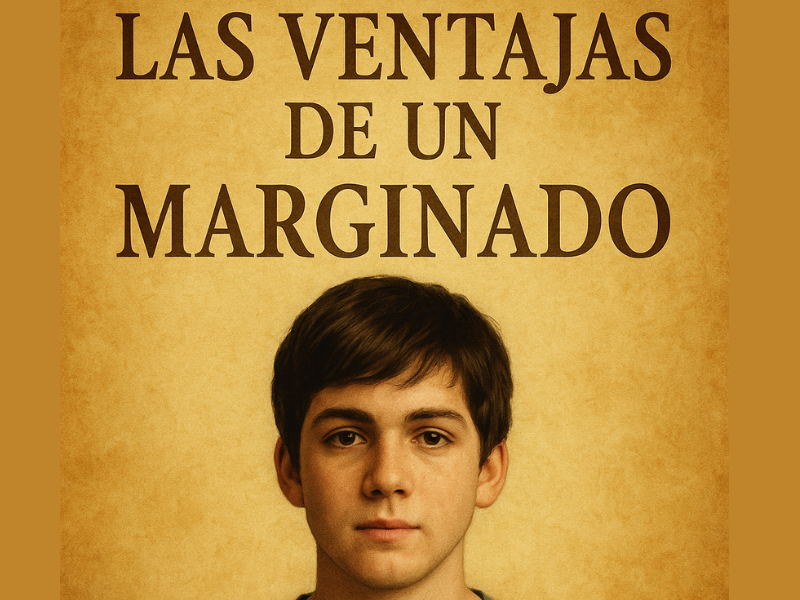
Who Stephen Chbosky is and why he wrote this story
Stephen Chbosky was born in Pittsburgh in 1970 and works as a screenwriter and film director as well as a novelist. The interesting part is that The Perks of Being a Wallflower was his first novel, and it connected with an entire generation.
Chbosky does not write from a distance, he writes from empathy. You can tell he understands what it means to feel displaced, confused, or too sensitive for a world moving this fast.
His writing is direct, emotional, and unadorned. He is not trying to impress you, he is trying to make you feel like somebody is there with you, and it shows in every line. He later directed the film adaptation himself, which let the movie hold onto the authenticity the book is known for. He pulled it off. Very few stories about adolescence manage to be this honest without turning cynical.
The power of letters, when writing becomes surviving
One of the loveliest things about this book is the epistolary format. Charlie writes letters to an anonymous person, somebody who never writes back and who becomes his silent confidant. That structure gives the text a brutal sense of intimacy. You are not reading a book, you are reading somebody’s heart.
There is one line that stayed with me: “We are infinite.”
It is simple, and it holds everything: that instant where you feel like you belong, where time stops, where life finally lines up for a moment. Maybe that is why so many people connect with this story, because all of us have wanted, at some point, to write to somebody who will not judge us, somebody who will just listen.
The real perks of being a wallflower
The title carries the whole argument of the book. A wallflower is the person standing at the edge of the party, watching everybody else. It sounds like a small, passive thing. The book insists it is neither.
Standing at the edge means seeing the room from another angle. It means feeling more, noticing what other people miss, connecting with the beauty in ordinary things, loving without filters, and, unfortunately, hurting more than your share.
Charlie is not a typical hero. He is not after fame or revenge or glory. He is only trying to understand himself, understand other people, and above all keep feeling things without breaking completely. That is where the real perk lives, in not losing your sensitivity in a world that pushes all of us to harden up.
The characters as mirrors of a generation
Every character in The Perks of Being a Wallflower stands for a kind of pain, a different way of facing the world.
Charlie
Our narrator. An introspective, smart kid who is emotionally wounded. He can look fragile, and his vulnerability is exactly where his strength comes from.
He is the kind of person who notices what nobody else does. The quiet friend who watches you and understands you without needing any words.
Sam
Free, luminous, brave. Also covered in scars. Sam stands for the search for self worth in the middle of confusion, and for the wish to outrun a painful past.
She is the engine of Charlie’s change, and his mirror too.
Patrick
Charismatic and overflowing, Patrick embodies joy as a defense mechanism. Behind the humor and the energy sits a deep pain, the pain of loving in a place that does not always accept difference.
Patrick is one of those characters who breaks your heart without meaning to.
The adults
Bill the teacher, the parents, the aunts and uncles. All of them are drawn with a mix of tenderness and criticism. The book shows how often the adults do not have the answers either.
Adolescence as a place of war and beauty
There is something universal in Charlie’s story, the passage between being and becoming. That stage where the world feels too big, where you do not know who you are, and where everything hits you like an electrical storm.
The book does not idealize adolescence, and it does not condemn it either. It shows the shadows, the loneliness, the abuse, the sexual confusion, the loss, along with the flashes of light: friendship, music, first loves, nights that never seem to end.
That doubleness is what makes it feel so human. Growing up hurts, and it heals.
It is one of those beautiful stories that leave you thinking, like Tengo ganas de ti, which stayed with me too.
Music, books, and small things
One of the nicest details in the book is how music and books turn into shelter. The mixtapes, the teacher’s reading recommendations, the moments shared in a car with a song playing.
That feeling of being alive just because you are hearing a melody or reading a line that seems written for you. Stephen Chbosky turns the ordinary into something sacred. That is what makes this story, small as it looks, enormous in what it means.
The movie, when the story found its voice
In 2012, Chbosky directed the film adaptation himself. The casting was perfect: Logan Lerman as Charlie, Emma Watson as Sam, and Ezra Miller as Patrick.
The film captured the essence of the book without simplifying it. The soundtrack, the cinematography, and the melancholy tone got a lot of people discovering the story for the first time. Some people still prefer the novel, because it carries more nuance and more pain, and the movie is a gem in its own right, a visual letter to everyone who has ever felt invisible.
The Perks of Being a Wallflower today
More than twenty five years have passed since the book came out, and its message is every bit as strong. Now that we talk so much about mental health, diversity, and empathy, The Perks of Being a Wallflower feels more current than ever.
It reminds us that not fitting in is fine, that the value is not in being like everybody else but in holding onto your ability to feel. The world needs more Charlies, more people who listen, who write, who are willing to look at what hurts without turning away.
Frequently asked questions about The Perks of Being a Wallflower
1. What exactly is the book about?
Growing up, healing, and learning to love in the middle of chaos. It is a story about friendship, identity, and the quiet pain of feeling different.
2. What does “wallflower” mean in this book?
It is the person at the edge of the room who watches instead of joining in. In Charlie’s case it is not a flaw. It is a way of paying attention, of feeling more and thinking for yourself.
3. Why is it so popular with young readers?
Because it does not judge. It handles real subjects, depression, abuse, sexuality, loss, with sensitivity and honesty.
4. Should I read the book or watch the movie first?
Start with the book if you can. It is more intimate and more raw. After that, the movie feels like a beautiful emotional extension of it.
5. Is there a sequel?
No, and it does not need one. This is a book that stays with you long after you close it.
What this book taught me
The Perks of Being a Wallflower reminded me that there is nothing shameful about feeling things, that sensitivity is not weakness. Being broken does not make you less human, it makes you better at understanding other people.
It also reminded me that all of us have the right to write our own letters, even if nobody reads them. In the end, what matters is not being part of everything, it is being true to who you are, even when that means standing off to the side sometimes.
Close the book, but not your heart
Reading The Perks of Being a Wallflower means looking in the mirror and understanding that you are not alone, that the odd parts of you are also the beautiful parts. So if you are going through something hard, or you just need a story that holds you without saying much, this book might be the shelter you did not know you were looking for.
If you are interested, you can get it on Amazon.
Now let me ask you something. Have you ever felt like a wallflower with perks? Tell me in the comments, I promise to read every word.